
Healthy calf rearing · 5 min read
Colostrum in the first hours: four factors that decide a calf's start
A calf is born without antibodies and only receives them with colostrum. ColoQuick names four factors that determine how many antibodies the calf actually absorbs: quality, time, bacteria and temperature.
Quality: every cow gives different colostrum
The amount of antibodies in colostrum varies greatly between cows in the same herd. Some produce a lot, others very little. If a calf gets colostrum straight from its mother, the result is a matter of chance and depends on which cow happened to be milked.
That is why colostrum quality is worth checking with a refractometer, and only good-quality portions should go into the colostrum bank.
Time: absorption capacity drops quickly
The calf’s gut loses its ability to absorb antibodies quickly after birth. ColoQuick recommends giving good-quality colostrum within the first hour of life. In its NativeCalfConcept, Holm & Laue provides for colostrum feeding during the first 2 days.
Bacteria: the enemy of antibodies
Bacterial contamination reduces antibody absorption, because bacteria break down or bind the immunoglobulins in colostrum. Colostrum must therefore be collected hygienically, frozen quickly and thawed in a closed system, without pouring it between containers.
Temperature: neither too cold nor too hot
Colostrum that is too cold does not stimulate the digestive tract properly, and colostrum that is too hot can damage the antibodies. It is best given at body temperature, after gentle thawing.
A colostrum bank in practice
The ColoQuick system is based on three steps: the best colostrum is frozen in bags and cartridges, after calving it is thawed in the unit in about 20 minutes, and the calf receives it straight from the bag, also with an oesophageal tube feeder. This way every calf can get a similar, good start, regardless of which cow calved.
Checklist
- Check every portion of colostrum with a refractometer and label the bags.
- Freeze only good-quality colostrum, immediately after milking.
- Give the first portion within the first hour of life.
- Thaw gently to body temperature, without a microwave or boiling water.
- Record the time and amount of colostrum given.
Important: this article is for information only and does not replace veterinary advice. If animals show signs of disease, contact your vet. Products are not medicines.
Sources
This article is based on manufacturers' material:
Products in this article
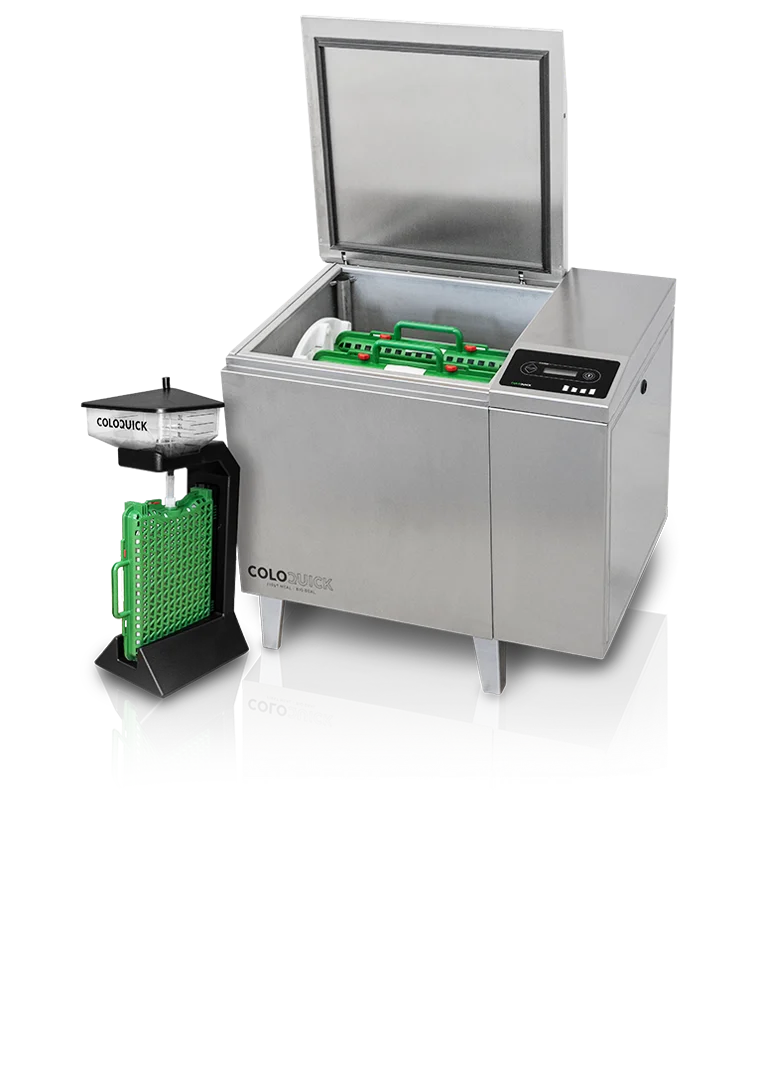
ColoQuick · Colostrum
Quote
ColoQuick PRIME
The basic ColoQuick system contains everything you need to get started. It thaws a full batch within about 20 minutes and processes two cartridges at the same time. It is a thawing unit without pasteurisation.

ColoQuick · Accessories
Buy now
ColoQuick Colostrum Bag
The disposable bag is designed for storing colostrum, ensuring effective thawing and optimal hygiene.

ColoQuick · Accessories
Buy now
ColoQuick Refractometer
Determines the antibody content of colostrum. Precise, easy to use and independent of colostrum temperature. Supplied in a storage box with pipette and calibration screwdriver.

ColoQuick · Colostrum
Buy now
Digital Refractometer
Digital refractometer showing colostrum quality in % Brix.

ColoQuick · Calf nutrition
Buy now
Esophageal Tube Feeder Set
Esophageal tube feeder set with hose and connector for feeding from a ColoQuick bag.

ColoQuick · Accessories
Buy now
ColoQuick Filling Station
Ergonomically designed and easy to clean, the filling station ensures easy and precise filling of colostrum bags.
Read next

Healthy calf rearing
Pasteurising colostrum and milk: when it makes sense and what to watch
4 min read

Healthy calf rearing
Feeding hygiene: buckets, teats and feeders under control
4 min read

Healthy calf rearing
Natural suckling and consistent feeding: feeding calves as nature intended
5 min read
Let’s talk about your herd
Ask about a solution for your herd.
Describe the situation on your farm. An Aquablend adviser will help work through the causes and choose a solution.